Properties (16)
Id a482c783-d8be-4e64-af29-745bcccb1cc2
Year 2023
Abstract
Cssclasses
- purpleRed
Aliases
- Auditory cortical functioning in individuals with misophonia
- (Aryal & Prabhu, 2023)
Key Terms
- Auditory late latency response (ALLR)
- auditory evoked potentials
Import Date 04-16-2024
Template Version Notes • added the tag “noted” to the definition of comments to ignore ( like with the “in another note” tag. this is so that when making notes on chapters of a textbook, i can still export things for manual addition to the obsidian note without having to keep track of what has already been added ). Also moved the version notes to the yaml section • this version added the bookmarks section to auto collect all bookmarks. it also dropped the template auto fill of the initial source field because we never got it working and just overwrote it manually anyway. this version also added logic to handle “in another note” tag. annotations marked with this are completely ignored. used when i have information covered in a bigger note, but still want to highlight that part in text for visual clarity (so as to avoid duplicates of the same information) • running the import more then once will overwrite the file, so do not import again if you have made changes in obsidian that are not in the zotero article.
Dissertation Source Tags
- EEG
- hearing
- ERP
- ALLR
- N1
- P2
- Auditory cortex
- auditory processing
- auditory evoked potentials
Quick Cites 2
In Depth Cites 1
Dv Initial Source Misophonia MOC
Dv Status #status/reviewed
Dv Relevance • results contradicts schröder et al (2014). • found no differences in hearing threshold between the Misophonia and control groups. • discusses a measure of auditory system function, and the AC sources of auditory related ERPs ( P1-N1-P2-N2) • used a single channel EEG system to look at N1 and P1 latencies in auditory latency responses (ALLR), with results suggesting a cortical deficit in auditory processing • not really sure how i feel about the single channel system. should run this by matt.
Checked For Zettle Notes true
Zotero Note Link Generated true
Auditory cortical functioning in individuals with misophonia: an electrophysiological investigation
Status:: #status/reviewed
Metadata
- Item Type: #journalArticle
- Authors: Sajana Aryal, Prashanth Prabhu,
- Date:
- Date Added: 1699414169000
- URL: https://link.springer.com/10.1007/s00405-023-08318-w
- DOI: 10.1007/s00405-023-08318-w
- Cite Key: aryalAuditoryCorticalFunctioning2023
- Topics: [object Object],[object Object]
- Tags: #to-review, #EEG, #Misophonia, #audiology, #diagnosis, #selected, #ERP, #ALLR, #auditory-ERP, #Cortical-response, #single-channel-EEG, #Diagnosis, #dx,
- [PDF Attachments]([Aryal_Prabhu_2023_Auditory cortical functioning in individuals with misophonia.pdf](file://C:\Users\attra\Zotero\storage\5WETMUMN\Aryal_Prabhu_2023_Auditory%20cortical%20functioning%20in%20individuals%20with%20misophonia.pdf))
Article Review Table: (Aryal & Prabhu, 2023)
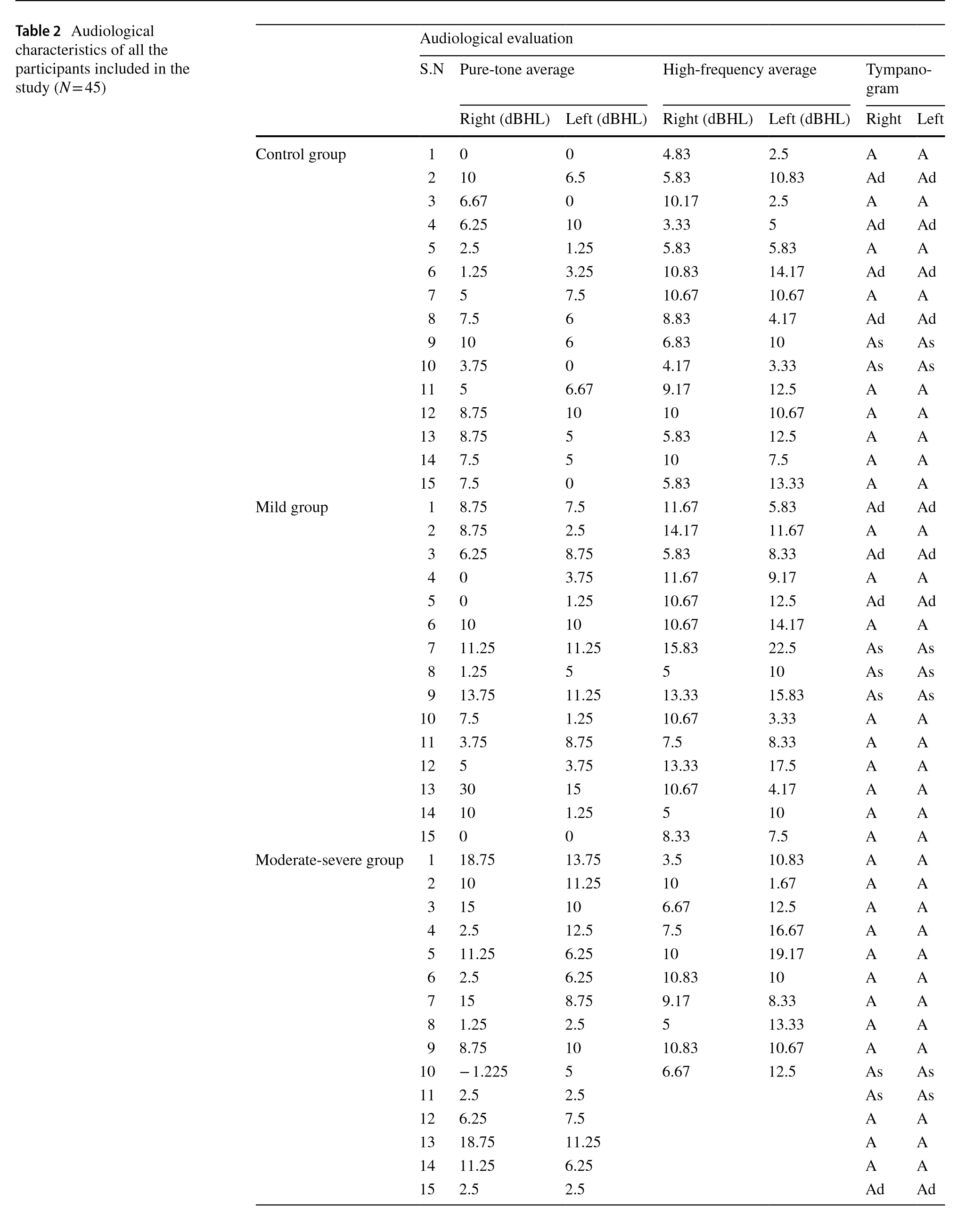
| Background/Purpose | Background- • research has shown heightened activity in neural areas that generate ERP’s related to ALLRs • misophonia is commonly comorbid with other sound related issue s(ex: tinnitus/hyperacusis). Purpose- • assess the prediction (given the neuro studies showing increased activity in ALLR areas for Misophonics, and comorbidity with other auditory issues ) that there are notable differences in late latency potentials in Misophonics compared to controls. (page 3) |
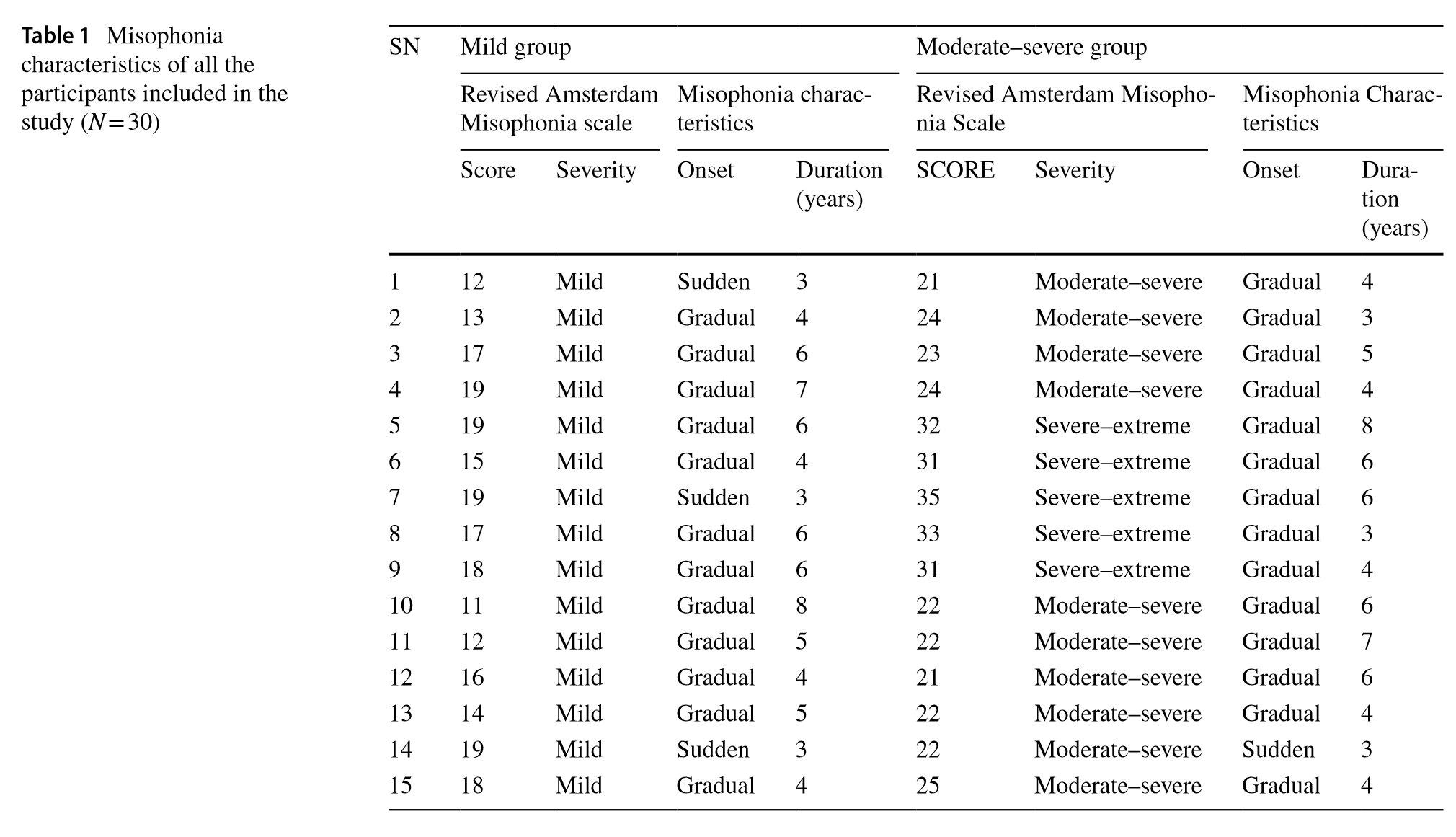
| Participants/samples | • prescreened with the audiological measures by professionals • 45 total, 30 Misophonic and 15 controls. • because of limited sample, Misophonics were classified into a mild (N=15) and moderate-severe (N = 15) group based on Amsterdam scores |
| Measures | • A-MISO-S revised used to asses Misophonia severity. • pure tone audiometry (PTA) • high-frequency audiometry (HFA) • immittance evaluation • auditory late latency response (ALLR) • single channel EEG montage • ALLR recording via Biologic Navigator Pro (page 3) |
| Procedures | • subjects prescreened with listed measures. comprehensive case histories were collected for the Misophonic group. ALLR test conducted using stim consisting of 500Hz bursts at 80dBSPL, with 1.1 stim presented per second. EEG recordings monitored during testing to ensure compliance with a prior parms analysis- • one way ANOVA to asses diffs in ALLR between Misophonic and control groups |
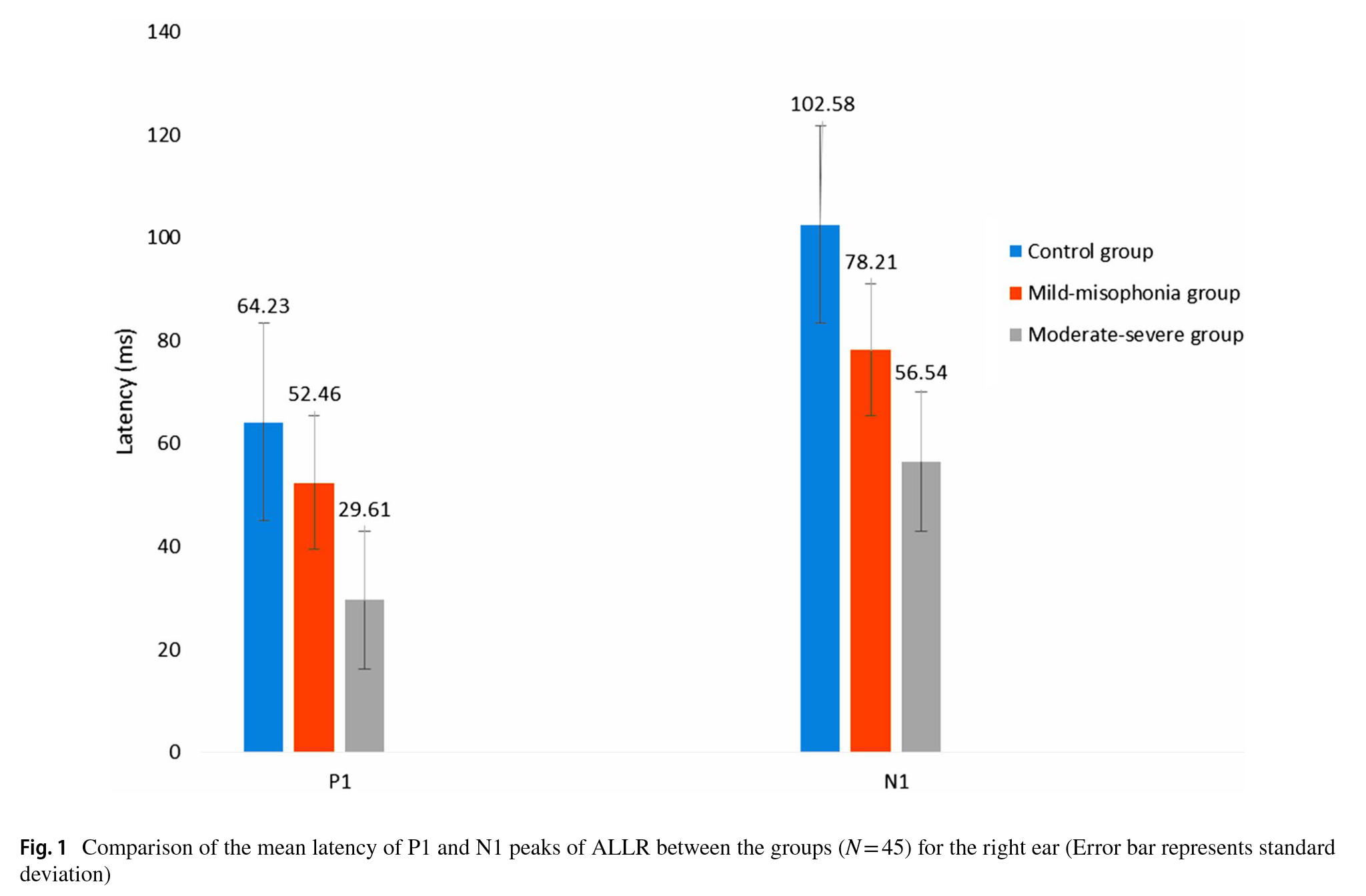
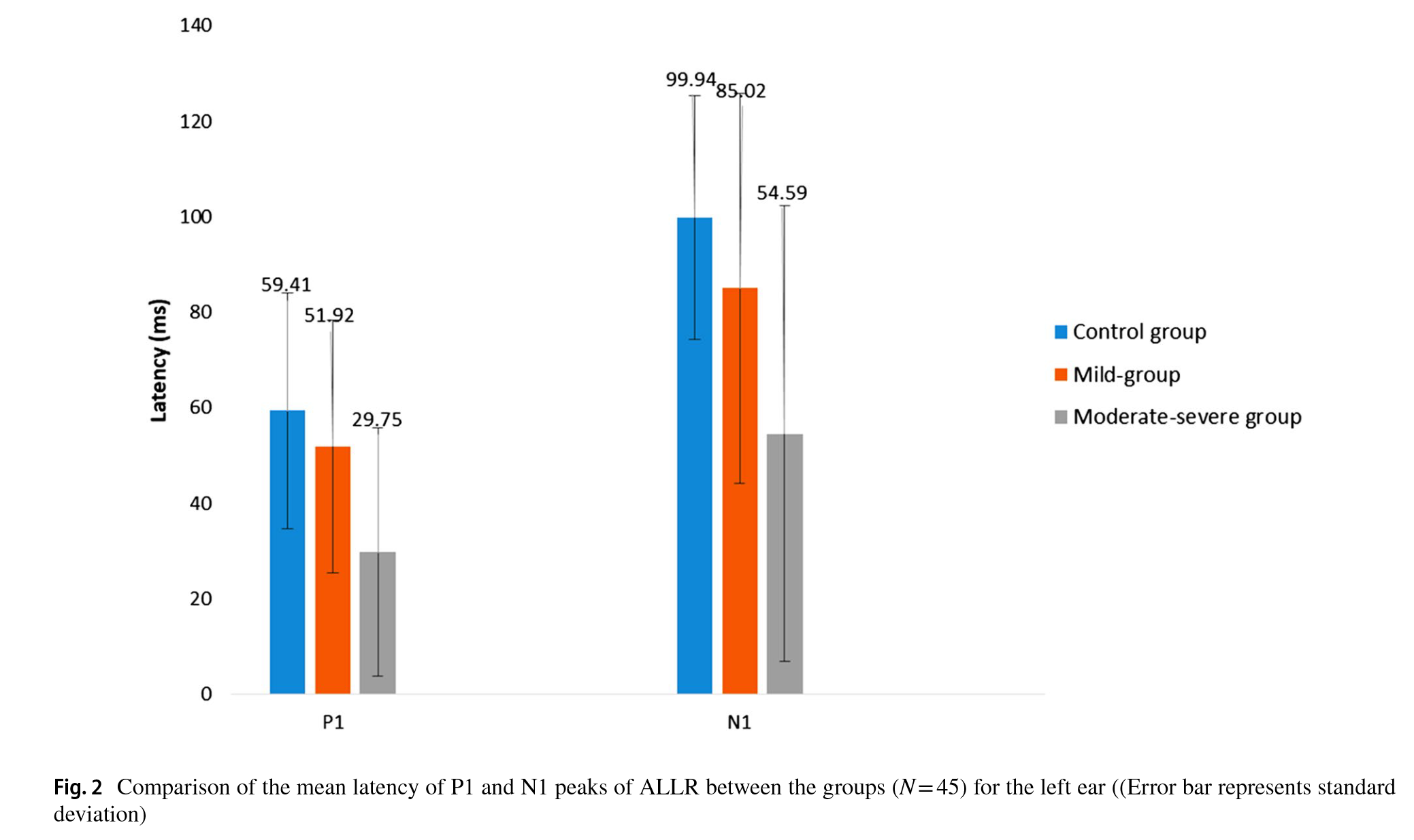
| Results | • • sample showed distinct categories of Misophonia severity based on the A-MISO-S scores • high pitch sounds were found to be the dominate trigger types (reported by 87.67% of Misophonics ) • results contradicts Schröder et al (2014) on a few points: • they found differences in Misophonics P1 andN1 peak latencies. ( unlike Schröder). the authors chuck it up to differences in the designs • the authors did not find a decreased mean N1 peak amp for the N1 in response to deviant stim for the Misophonic group compared to control. again chucking it up to differences in design , the inclusion of subjects with less severe Misophonia compared to Schröder, and the differences in stim between these studies ( oddball for Schröder, 500hZ tone burst n this study) • N1 peak was the most consistent and reliable ALLR peak in the sample but was not diff between the groups in response to triggers • found no sig diffs in the amp latency for P2 and, indicating normal function of AC regions in the Misophonic sample. • found no differences in hearing threshold between the Misophonia and control groups. (page 5) • high pitch sounds were found to be the dominate trigger types (reported by 87.67% of Misophonics ) (page 5) • schroder). the authors chuck it up to differences in the designs (page 14) • found no sig diffs in the amp leatency for P2 and, idicating normal fucntion of AC regions in the Misophonic sample. (page 14) |
| Discussion/Limits | Conclusion- • results suggests that Misophonics high-level auditory processing is comparable to controls. • finding earlier P1/N1 peaks in Misophonics vs controls in ALLR suggests possible abnormality of auditory perception and processing in Misophonia for the brain regions taha generate thouse ERPs. but this claim needs further validation • the convergence of this studies findings (page 5) • The authors conclude that individuals with misophonia exhibit earlier P1 and N1 peak latencies. • The findings indicate altered cortical auditory processing in regions generating P1 and N1. • The data support hyperactivation of auditory cortical and related subcortical pathways. • The findings align with prior fMRI evidence of altered auditory cortex activity. • The authors conclude that ALLR may serve as a potential clinical correlate for misophonia. • The authors state that higher-level cognitive auditory processing (P2, N2) appears unaffected. • The authors indicate that misophonia may involve distinct neurophysiological mechanisms compared to tinnitus and hyperacusis. Limitations- • not sure i trust the single channel system thing |
| Limitations:: | |
| Future Directions:: | |
| Relevance:: | • results contradicts schröder et al (2014). • found no differences in hearing threshold between the Misophonia and control groups. • discusses a measure of auditory system function, and the AC sources of auditory related ERPs ( P1-N1-P2-N2) • used a single channel EEG system to look at N1 and P1 latencies in auditory latency responses (ALLR), with results suggesting a cortical deficit in auditory processing • not really sure how i feel about the single channel system. should run this by matt. |
Notes
- Auditory late latency response (ALLR)- AKA auditory evoked potentials, refers to neural reaction to auditory stim processed withing/around the auditory cortex. provides insight to the functional integrity of extra-brainstem auditory system. consists of complex e-potentials occurring 50-300 ms post stim onset. characterized by P1-N2-P2-and N2 sequences, generated from distinct parts of the AC. (page 3)
my engagement notes
my questions
my comments
Bookmarks
- bookmark talking about the AC sources for the ALLR ERPS (page 3)
- bookmark talking about EEG set up (page 5)
- bookmark for audiology assessment stuff (page 6)
- bookmark talking about the ALLR findings (page 7)
- bookmark for talking about the diffs between this study and Schröder 2014 (page 14)
reading notes
-
authors describe idea that existing research indicated distinct neurophysiological mechanisms for Misophonia tinnitus, and hyperacusis. showing the complicated multifaceted nature of auditory issues and that they have unique characteristics despite some similarities. (page 14)
-
look up (page 15)
zettelkasten
Aryal & Prabhu 2023 findings of altered cortical auditory processing in regions generating P1 and N1