Properties (12)
- purpleRed
- Mimicry in misophonia
- (Ash et al., 2024)
Mimicry in misophonia: A large‐scale survey of prevalence and relationship with trigger sounds
Status:: #status/reviewed
Metadata
- Item Type: #journalArticle
- Authors:: Paris A. Ash, Ester Benzaquén, Phillip E. Gander, Joel I. Berger, Sukhbinder Kumar,
- Date:
- Date Added: 1756924048000
- URL: https://onlinelibrary.wiley.com/doi/10.1002/jclp.23605
- DOI: 10.1002/jclp.23605
- Cite Key: ashMimicryMisophoniaLargescale2024
- Topics: [object Object]
- Tags:: #clinical, #Diagnosis, #measures, #mimicry, #Misophonia, #Misophonia-Questionnaire, #reviewed, #social-cognition,
- PDF Attachments
Abstract
| Background/Purpose | Background- • Misophonia is increasingly recognized as involving both auditory and social components, not just sound sensitivity. • The dominant model ("sound-processing framework") emphasizes abnormal auditory-emotional brain processing but ignores social context and the role of actions producing the sound. • Mimicry of trigger actions is a known social behavior, but its prevalence and role in misophonia remain largely unexamined beyond anecdotal/case reports. Purpose- • To examine the prevalence of mimicry among individuals with varying misophonia severity. • To determine whether mimicry is linked to specific trigger sound types. • To assess whether mimicry modulates distress in individuals with misophonia. |
| Participants/samples | • N = 676 participants • Age: 18–81 years (Mean = 38.39, SD = 16.10) • Gender: 74.7% female, 24.6% male, 0.7% other • Recruited from misophonia support groups and a neuroscience volunteer registry. • Included individuals with a range of misophonia severity (including no symptoms). |
| Measures | • Misophonia Questionnaire (MQ): • Symptom Scale (sensitivity to specific sounds) • Emotions Scale (emotional/behavioral responses) • Severity Scale (rated 0–15, with anchors for interpretation) • Mimicry Assessment: 5 custom lab-developed questions (e.g., incidence, control, distress relief), mostly Likert-scale. |
| Procedures | • Online questionnaires delivered via Google Forms. • Participants provided consent, completed 64 questions (~20 min), and could enter a prize draw. • Data anonymized and ethics approved by Newcastle University. |
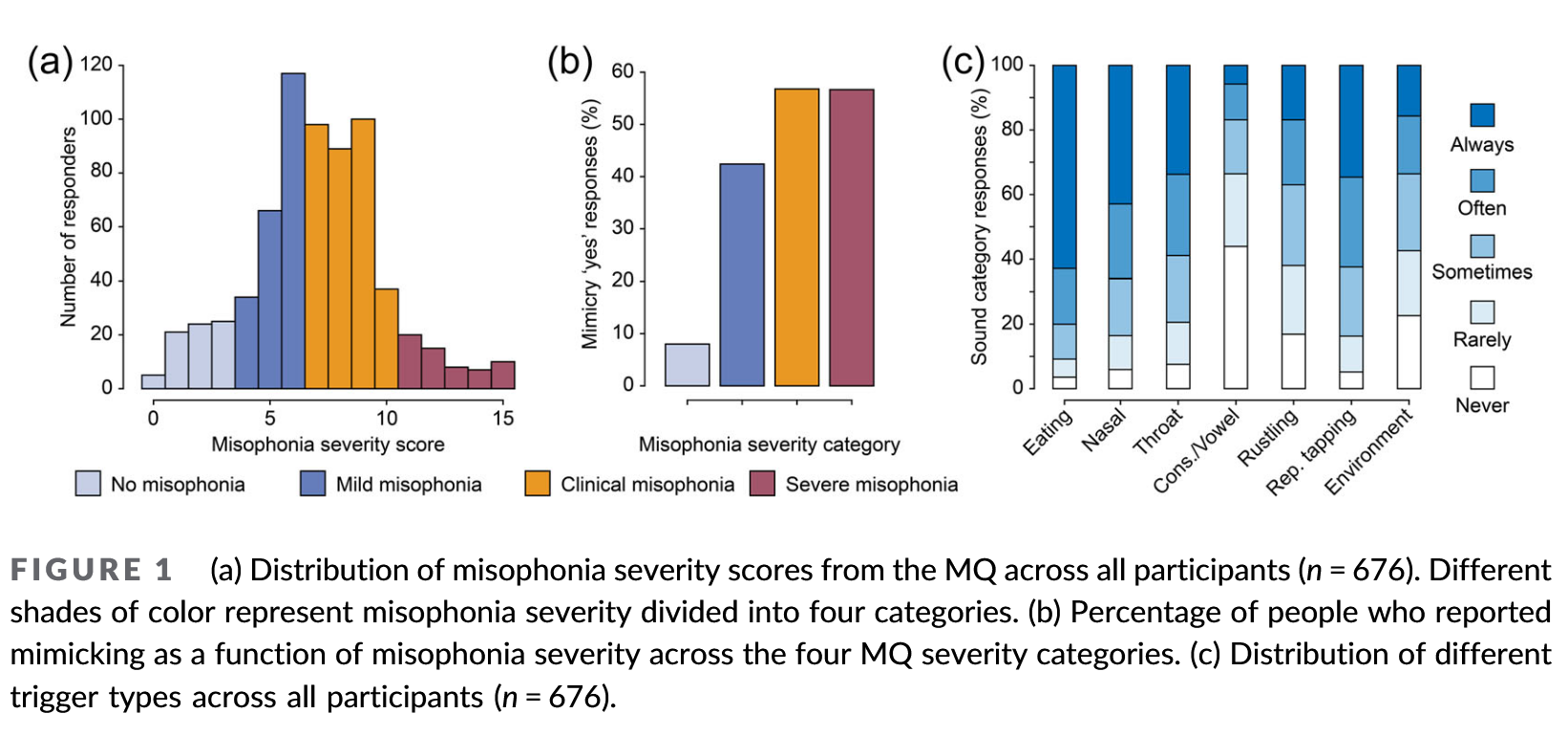
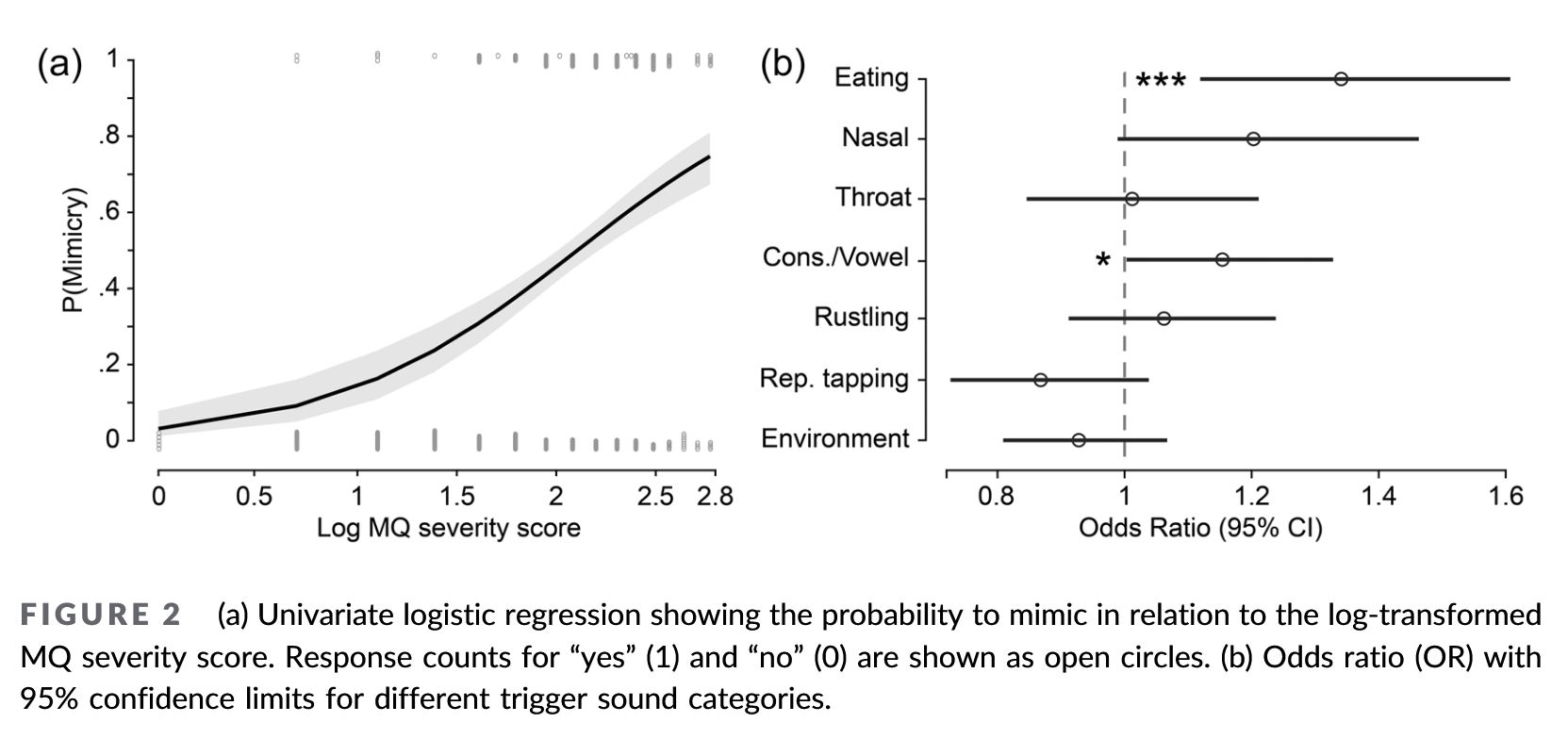
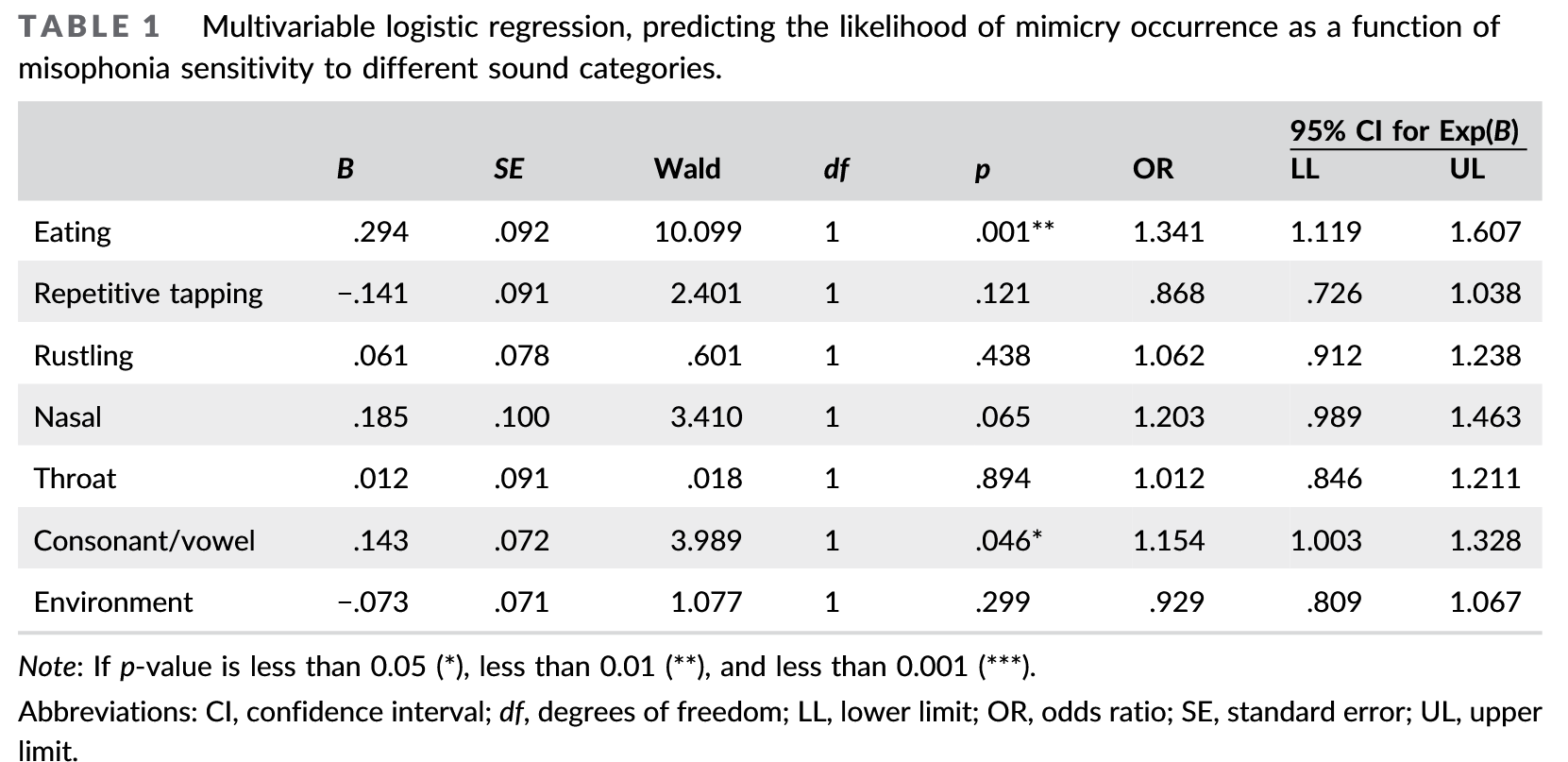
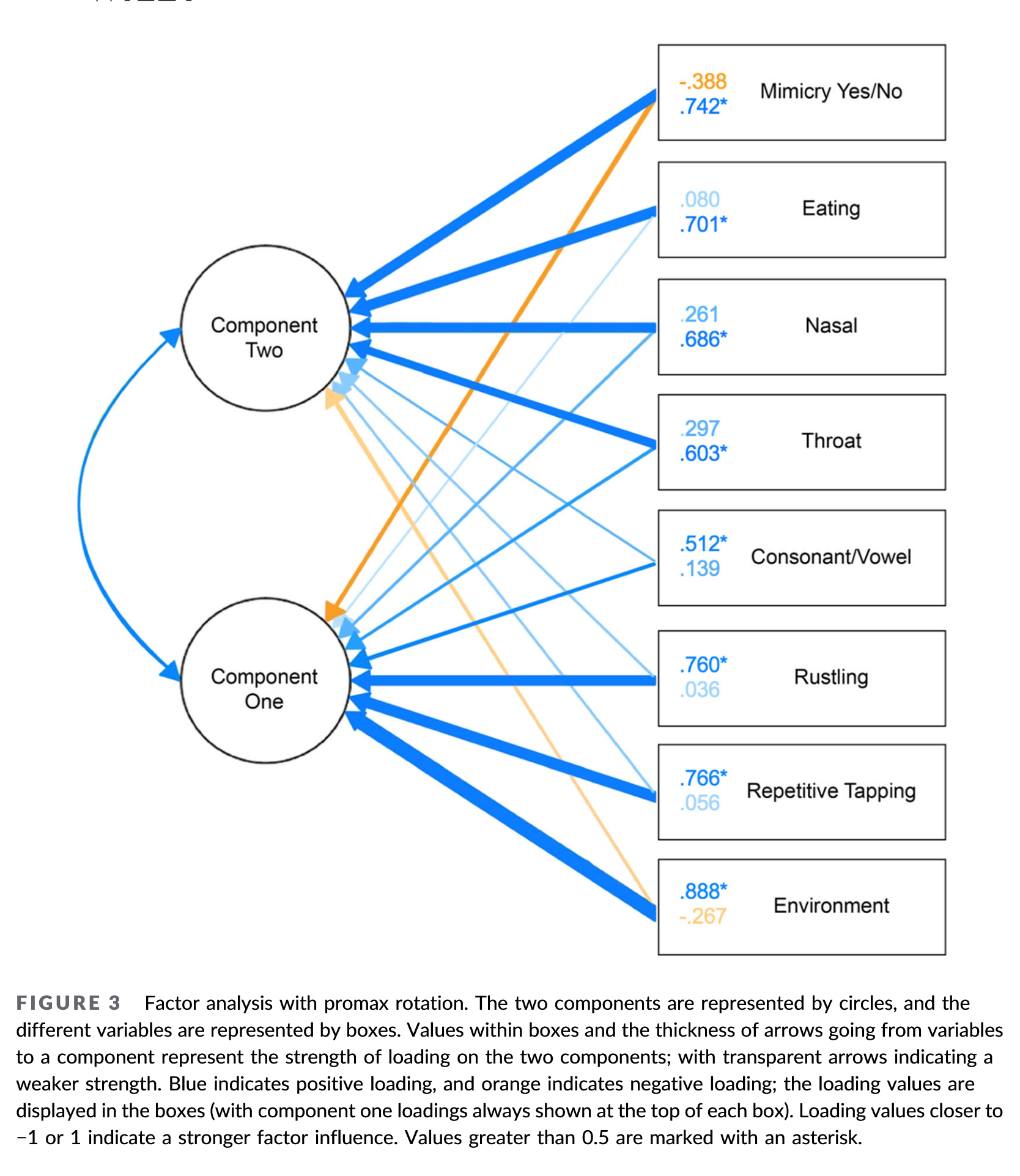
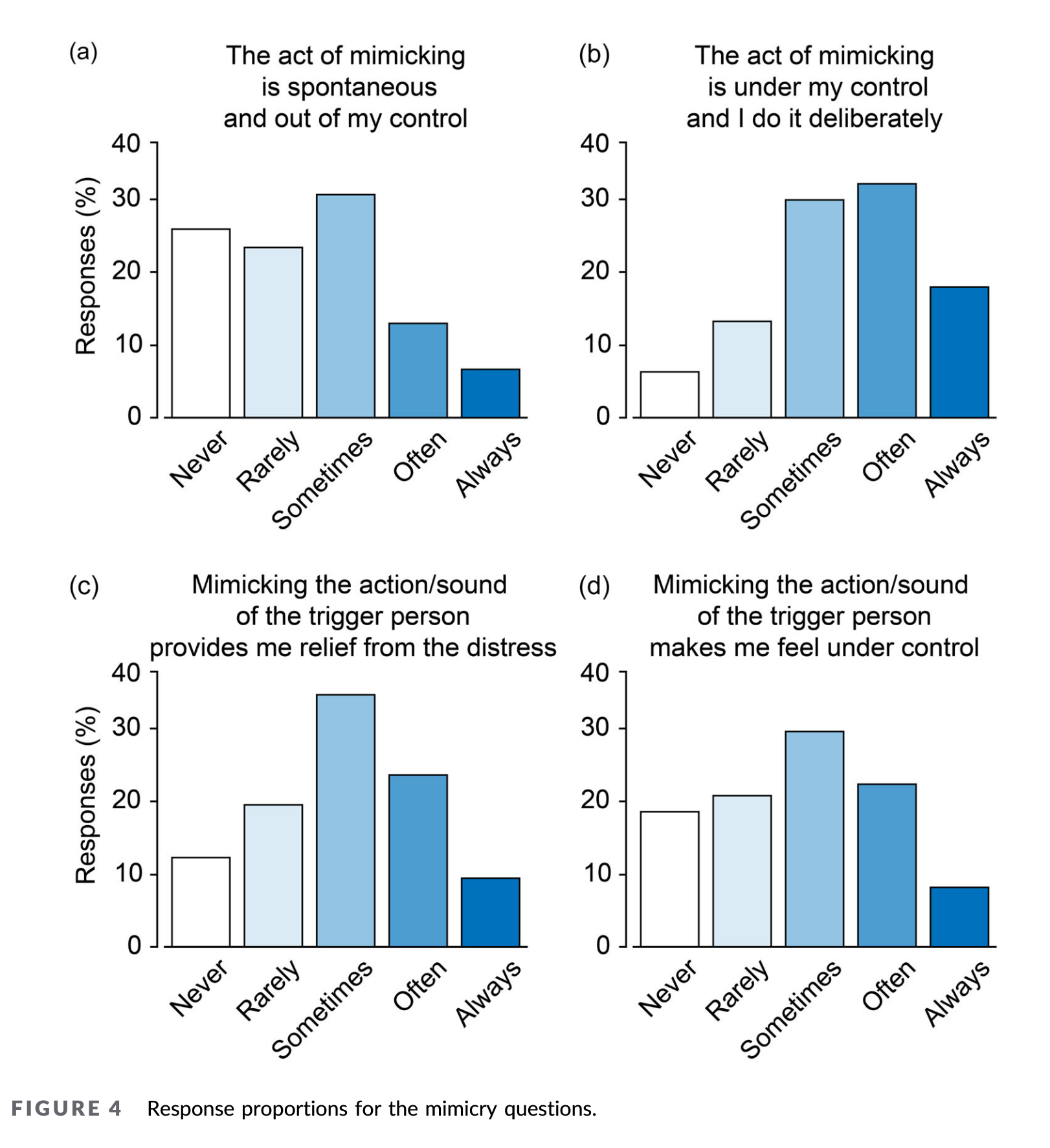
| Results | • Prevalence of Mimicry: • 46.7% of all participants reported mimicking trigger sounds/actions. • Mimicry prevalence increased with misophonia severity (e.g., 8% in “no misophonia,” ~57% in “clinical/severe”). • Sound Category Associations: • Eating sounds were the most significant predictors of mimicry (OR = 1.341, p = .001). • Consonant/vowel sounds also predicted mimicry (OR = 1.154, p = .046). • Relief and Control: • ~80% reported that mimicry was voluntary. • ~68% reported relief from distress through mimicry. • ~60% felt mimicry gave them a sense of control. • Factor Analysis: • Mimicry and orofacial sounds (e.g., eating, nasal, throat) loaded together on one factor. • Non-orofacial/environmental sounds did not show strong associations |
| Discussion/Limits | Conclusion- • Mimicry is common in misophonia, increases with symptom severity, and is especially tied to orofacial trigger sounds. • Mimicry may serve as a coping mechanism to reduce distress and restore self-control. • Findings support a more socially integrated model of misophonia involving sensory-motor processes |
| Limitations:: | • Mimicry data are self-reported, potentially underestimating involuntary mimicry. • Limited range and granularity of mimicry questions. • Underrepresentation of non-orofacial triggers may have influenced generalizability. |
| Future Directions:: | • Use physiological (e.g., EMG) methods to detect subtle, unconscious mimicry. • Develop validated, comprehensive mimicry assessment tools. • Explore mimicry responses to broader classes of trigger sounds (e.g., non-human, environmental). |
| Relevance:: | • looks at the rates of self reported use of mimicry as a coping mechanism in Misophonia, finding that greater Misophonia severity as measured on the MQ was associated with greater rates of mimicry use. they also found that eating/chewing triggers were more associated with mimicry responses and that mimicry provided some relief from Misophonia symptoms. • describes the concept of “spontaneous mimicry” as the automatic reproduction of of another persons motor movements, behaviors, or facial expressions without conscious intention to do so. this could be relevant to the Kumar motor model • explains the observation that Mimicry dampens Misophonia responses as the result of the act of mimicking enabling sensory prediction and restoring a sense of agency • discusses the concept of the perception-action link in the context of Misophonia • postulates that enhanced mimicry could be the result of stronger sensory-motor cortex connectivity in Misophonia |
Notes
key terms and concepts
-
Misophonia – A condition marked by extreme negative emotional responses (anger, disgust, anxiety) to specific trigger sounds (e.g., chewing, breathing).
-
Trigger Sounds – Everyday human-produced sounds (chewing, eating, nasal sounds) that provoke misophonic reactions.
-
Mimicry – The act of imitating or replicating the action or sound of the trigger person, observed both as spontaneous and intentional behavior.
-
Orofacial Sounds – Sounds resulting from movements of the mouth and face (e.g., chewing, throat sounds).
-
Perception-Action Link – A theoretical model where perceiving an action leads to internal motor activation and potential imitation.
my engagement notes
my questions
my comments
- was a lot more insightful then I thought it was going to be.. got to remember to always check the discussion because I almost missed all the juicier stuff. (page 7)
Bookmarks
- bookmark for talking about mimicry in general (page 8)
- bookmark for linking mimicry to misophonia (page 9)
- bookmark talking about why mimicry might help misophonia (page 9)
- bookmark talking about the perception-action link (page 10)
Neural Basis
- Prior fMRI work shows stronger connectivity between sensory and orofacial motor areas in misophonia, supporting perception-action link hypotheses.
Theoretical Contributions
-
Suggests misophonia may reflect disrupted modulation of spontaneous mimicry.
-
Highlights mimicry as a potentially adaptive or compensatory behavior.
reading notes
zettelkasten
- spontaneous mimicry could be descriptive of the Kumar motor basis of misophonia motor
- Mimicry dampens Misophonia responses by enabling sensory prediction and restoring a sense of agency
- does mimicry impact misophonia related sensory motor responses
- sensitivity to eating sounds is the strongest predictor of mimicry responses in Misophonia